
When a crisis hits a commercial property, corporate headquarters, or large-scale event, time ceases to be an abstract concept. It becomes a metric measured in lives, assets, and reputation. In a bustling metropolis like Chicago, the complexities of managing an unexpected threat multiply exponentially. Dense urban environments, unpredictable weather shifts, and complex local infrastructure mean that a generic security strategy will fail when the pressure rises.
True resilience depends entirely on foresight. Creating an actionable blueprint guarantees that your team moves with precision rather than panic. Mitigating damage requires more than just high-tech alarms; it demands a synergy between physical readiness and strategic personnel. Let us break down the critical steps required to build a resilient crisis framework that keeps your organization secure under any circumstances.
The Anatomy of an Actionable Emergency Response Plan
A stack of binders gathering dust on a corporate shelf does not qualify as a safety strategy. A highly functional emergency response plan must be an agile, living protocol that every stakeholder understands instinctively. Security threats evolve rapidly, which means your operational guidelines must remain flexible yet highly structured.
Comprehensive Threat Assessment and Risk Mapping
Before writing a single line of your protocol, you must audit your specific vulnerabilities. A high-rise downtown faces vastly different operational hazards than a sprawling logistics warehouse on the outskirts of the city. Identify the most probable scenarios, ranging from severe weather and structural fires to active threats and workplace violence.
Map out your facility’s physical layout, highlighting hazardous material storage, utility shut-off valves, primary evacuation routes, and designated safe zones. This baseline data forms the foundation of your entire tactical response.

Clear Chains of Command and Communication Networks
Confusion kills momentum during an active crisis. Your protocol must establish an airtight hierarchy of authority. Who initiates the evacuation? Who contacts local first responders? Who accounts for staff members at the designated assembly points?
- The Incident Commander: Holds ultimate decision-making authority over the site.
- The Communications Officer: Manages internal alerts and liaises with external emergency personnel.
- Floor Wardens: Ensure specific zones are cleared safely and systematically.
Backup personnel must be assigned to every critical role. If a primary decision-maker is off-site or incapacitated, the transition of leadership must occur instantly without disrupting the evacuation workflow.
Mitigating the Human Resource Gap: Tactical Emergency Staffing
Even the most sophisticated strategic document is useless without capable hands to execute it. When real-world crises unfold, regular staff members are naturally consumed by self-preservation. Relying solely on untrained employees to manage crowd control, secure exits, or handle asset protection during a lockdown is a recipe for operational failure. This is where strategic personnel allocation becomes non-negotiable.
The Vulnerability of Understaffed Facilities
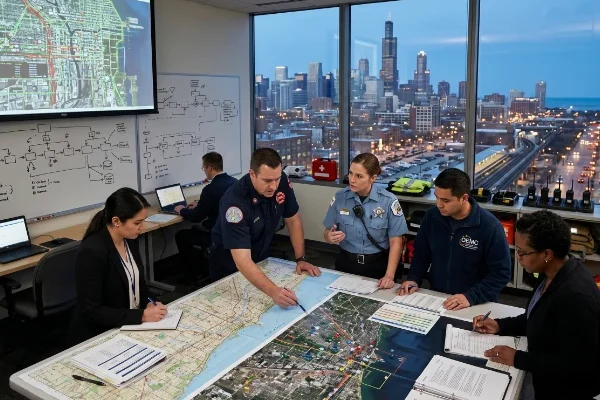
Crises inherently cause confusion, and confusion breeds opportunism. During fire evacuations or power grid failures, facilities frequently experience secondary threats like looting, unauthorized entry, or intellectual property theft. If your personnel are stretched thin merely trying to guide people out of a building, your physical assets remain completely exposed.
Dynamic emergency staffing addresses this vulnerability directly. It ensures that trained, clear-headed professionals are deployed to high-risk zones instantly, allowing your internal leadership to focus entirely on human safety.
Why Scaling Security Personnel Matters
A localized crisis might require two or three specialized guards to secure a perimeter. A city-wide or district-wide disruption, however, requires a scalable workforce capable of adapting to fluid conditions. Partnering with a dedicated security company that offers rapid-deployment personnel ensures your facility is never left vulnerable during unexpected spikes in regional risk. These professionals bring tactical calm to chaotic situations, anchoring your evacuation or shelter-in-place initiatives with authoritative presence.
Validating Your Protocols Through Rigorous Testing
An untested strategy is simply a collection of assumptions. To ensure your team can execute your plan under immense stress, you must subject your systems to consistent, practical verification.
Conduct Layered Drills and Scenario Simulations
Do not limit your preparation to standard fire drills. Introduce varied, unannounced scenarios to test how your personnel adapt to changing variables.
- Tabletop Exercises: Gather your leadership team and key security stakeholders to talk through a theoretical crisis step-by-step, identifying logical gaps in your current protocol.
- Functional Drills: Test specific components of your plan, such as emergency communication systems, panic buttons, or backup power generation.
- Full-Scale Simulations: Execute a live, realistic crisis scenario involving your entire workforce and external security partners to analyze real-time performance.

Post-Incident and Post-Drill Auditing
Every test run must be followed by an honest, data-driven debriefing. Document where communication lagged, which exits became congested, and how effectively your personnel maintained perimeter control. Use these insights to refine your master plan continuously, keeping it sharp and aligned with current urban safety standards.
Selecting a Professional Security Partner in Chicago
Managing the shifting safety landscapes of a major metropolitan area requires deep local expertise. A generic national template will not account for the logistical realities of operating within the local business districts or industrial corridors. Securing your enterprise demands a localized approach backed by elite physical protection assets.
| Generic Security Providers | Advanced Localized Protection |
| Static, template-based response Slow deployment during crises Basic guard training standards | Custom risk-mapped tactical protocols Rapid-response emergency staffing Crisis-tested, authoritative guards |
When evaluating a premier security company in chicago, prioritize providers that integrate seamlessly with your corporate culture while maintaining uncompromising operational readiness. Your security partner should assist in building your response blueprint, training your staff, and deploying highly disciplined guards the moment your operations face a threat.
Elevating Your Security Stance
True peace of mind is never accidental. It is the direct result of deliberate analysis, rigorous training, and elite physical support. Leaving your business, assets, and personnel unprotected against the unpredictable realities of an emergency is a risk you cannot afford to take. A well-crafted response plan saves lives, protects your hard-earned investments, and ensures your operations can weather any storm.
Do not wait for a crisis to expose the cracks in your organization’s defenses. Take definitive, proactive control of your facility’s safety today. Contact the elite team at Advanced Security Services by visiting Advanced Guards to consult with a senior protection specialist. Let us design, staff, and fortify a custom security solution that safeguards your enterprise against the unexpected.